

After Abortion Care & Recovery Tips – A Complete Guide
Table of Contents
- Why Abortion Pill After Care Matters
- Abortion Pill After Care Instructions
- What to Eat After an Abortion for Fast Recovery
- Emotional Recovery After Abortion
- Recovery Time After Abortion – What to Expect
- Some Easy Tips to Manage Side Effects After an Abortion
- When to Seek Medical Care: Complications & Red Flags
- Frequently Asked Questions (FAQs)
- Conclusion
- References
Medical Review
Content Reviewed by Dr. Tom Henry, MD (OB/GYN), NewYork-Presbyterian – 10+ years in reproductive healthcare.
Last Updated: 28 Aug 2025
After abortion care matters if you have just gone through a medical abortion, while the use of abortion pills is nothing to worry about, the process is safe and effective, but the aftercare is often overlooked. All you need is some clear and simple instructions for abortion aftercare.
Some tips or after abortion care guides can be confusing and may come with incomplete advice. But no need to worry, in this blog, we bring you everything you need to know about abortion aftercare. Everything you need to feel supported at all times is right here, from useful recovery tips to emotional support.
Why Abortion Pill After Care Matters
Some major changes occur to your body and mind when you go through a medical abortion. Mifepristone and Misoprostol abortion pills or MTP Kit work to end the pregnancy by stopping fetal growth by blocking the progesterone hormone, and emptying the uterus of pregnancy tissues by causing uterine contractions.
After this hectic process, recovery is crucial. Without proper medical abortion aftercare, you may experience prolonged bleeding, unnecessary stress, and even complications. Your body requires the right care to heal faster, regain energy, and support your mental well-being.
Dosage, follow-up care, and healthcare access may vary by country or state—consult a local healthcare provider for guidance.
Abortion Pill After Care Instructions
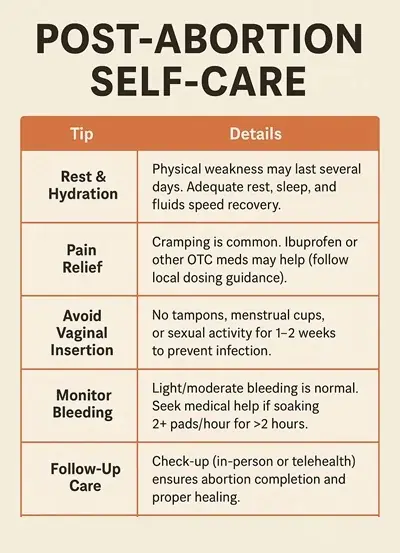
| Tip | Details |
| Rest & Hydration | Physical weakness may last several days. Adequate rest, sleep, and fluids speed recovery. |
| Pain Relief | Cramping is common. Ibuprofen or other OTC meds may help (follow local dosing guidance). |
| Avoid Vaginal Insertion | No tampons, menstrual cups, or sexual activity for 1–2 weeks to prevent infection. |
| Monitor Bleeding | Light/moderate bleeding is normal. Seek medical help if soaking 2+ pads/hour for >2 hours. |
| Follow-Up Care | Check-up (in-person or telehealth) ensures abortion completion and proper healing. |
What to Eat After an Abortion for Fast Recovery
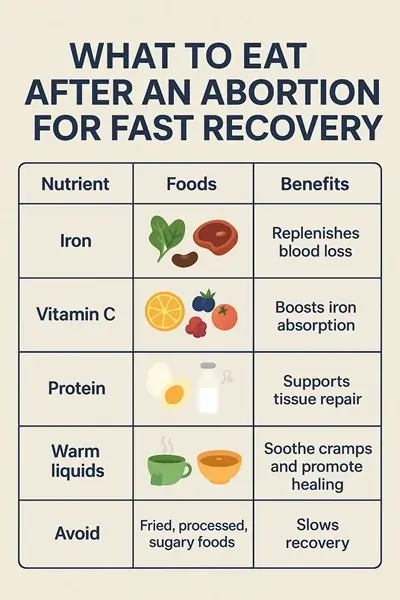
What you eat plays an important role in recovery after abortion. When you lose blood and energy, the right foods can help you get stronger faster.
| Nutrient | Foods | Benefits |
| Iron | Spinach, beans, red meat, lentils | Replenishes blood loss |
| Vitamin C | Oranges, berries, tomatoes | Boosts iron absorption |
| Protein | Eggs, chicken, tofu, dairy | Supports tissue repair |
| Warm liquids | Herbal teas, soups | Soothe cramps and promote healing |
| Avoid | Fried, processed, sugary foods | Slows recovery |
Emotional Recovery After Abortion
Healing physically is often faster, but emotional healing may take more time. It is normal to have feelings of relief, sadness, or even guilt. Coping may seem difficult, but here are some ways that can help:
- Be vocal: Talk to someone you trust, a friend, or a counselor.
- Practice self-care: Journaling, meditation, and gentle yoga can soothe your mind.
- Seek professional help: If negative feelings persist, reach out to a mental health expert.
Resources:
- Post-Abortion Counseling (US): Exhale
- Mental Health Support: SAMHSA National Helpline – 1-800-662-HELP (4357)
- International Support: Ipas Support Services
Remember, emotional well-being is a crucial part of after-abortion care and recovery.
Recovery Time After Abortion – What to Expect
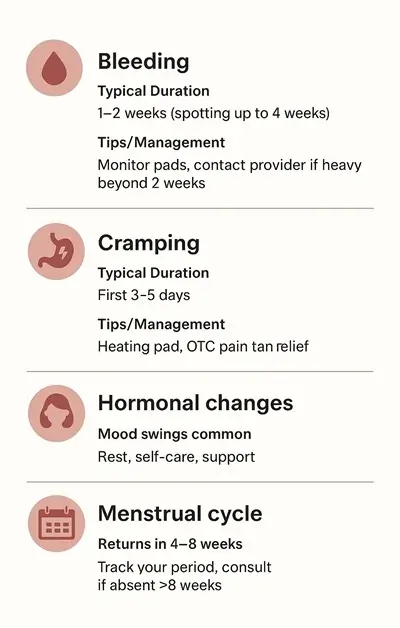
| Symptom | Typical Duration | Tips/Management |
| Bleeding | 1–2 weeks (spotting up to 4 weeks) | Monitor pads, contact provider if heavy beyond 2 weeks |
| Cramping | First 3–5 days | Heating pad, OTC pain relief |
| Hormonal changes | Mood swings common | Rest, self-care, support |
| Menstrual cycle | Returns in 4–8 weeks | Track your period, consult if absent >8 weeks |
Generally, you need at least 1–2 weeks of recovery time after abortion. Emotional recovery may take longer.
Some Easy Tips to Manage Side Effects After an Abortion
- Use a heating pad or hot water bottle to ease cramps.
- Take OTC medicines like ibuprofen for pain relief. (check local guidance)
- Stay hydrated, especially if vomiting or diarrhea occurs.
- Wear a supportive bra to relieve breast tenderness.
- Confide in trusted friends, family, or your partner.
When to Seek Medical Care: Complications & Red Flags
While most people recover safely after a medical abortion, it’s important to recognize warning signs. According to the World Health Organization (WHO), American College of Obstetricians and Gynecologists (ACOG), and Mayo Clinic, complications are rare but can occur. Early recognition ensures timely treatment and protects both physical and emotional health.
Immediate Red Flags – Seek Care Right Away
- Heavy Bleeding: Soaking 2 or more pads per hour for more than 2 hours or passing large clots (>2 inches / 5 cm) [WHO, 2022].
- Severe Abdominal Pain: Not relieved by OTC pain medication (ibuprofen) or heat therapy.
- Fever or Chills: Temperature ≥100.4°F (38°C) lasting more than 24 hours, indicating possible infection.
- Foul-Smelling Vaginal Discharge or unusual odor.
- Dizziness, Fainting, or Rapid Heartbeat: Could indicate significant blood loss.
- Incomplete Abortion Signs: Persistent pregnancy symptoms (breast tenderness, nausea, or continued pregnancy bleeding) beyond 2 weeks may signal retained tissue.
Watchful Timelines – When to Consult
- Bleeding: Light to moderate bleeding usually stops within 1–2 weeks. Spotting can persist up to 4 weeks [Planned Parenthood]. Contact your provider if bleeding is heavy beyond 2 weeks.
- Cramping: Strongest in the first 3–5 days; should decrease afterward. Severe pain beyond 1 week warrants evaluation.
- Menstrual Cycle Return: Periods typically resume within 4–8 weeks. Absence of menstruation beyond 8 weeks should be checked.
- Emotional Health: Mood swings are common, but persistent sadness, anxiety, or guilt lasting more than 2 weeks may require professional support.
Long-Term Fertility
Medical abortion does not affect future fertility. Ovulation can return within 2–3 weeks, and conception is possible. Multiple studies confirm safe future pregnancies.
Mental Health & Emotional Support
Abortion can have an emotional impact. Seek professional help if you experience:
- Persistent anxiety or depression
- Trouble resuming daily activities
- Difficulty coping with grief or guilt
Resources:
- Post-Abortion Counseling (US): Exhale
- Mental Health Support: SAMHSA National Helpline – 1-800-662-HELP (4357)
- International Support: Ipas Support Services
Follow-Up Appointments
- Schedule a check-up within 1–2 weeks (in-person or telehealth) to ensure abortion completion and healing.
- Seek urgent care immediately if any red flag symptoms appear.
Frequently Asked Questions (FAQs)
Q1. How long does it take to recover after a medical abortion?
Most people recover physically within 1–2 weeks, though light bleeding or spotting may last up to 4 weeks. Emotional recovery may take longer and varies for each person.
Q2. What should I avoid after taking abortion pills?
Avoid using tampons, menstrual cups, or engaging in sexual activity for at least 1–2 weeks to reduce infection risk. Also, avoid heavy lifting until you regain strength.
Q3. Can I get pregnant again after an abortion?
Yes. Fertility can return within 2–3 weeks after an abortion because ovulation may resume quickly. Using contraception is recommended if you want to delay pregnancy.
Q4. What foods help recovery after abortion?
Iron-rich foods (spinach, beans, red meat), vitamin C sources (citrus, berries), protein (eggs, tofu, chicken), and warm liquids (herbal teas, soups) support faster recovery.
Q5. When should I see a doctor after a medical abortion?
Schedule a follow-up (in-person or telehealth) within 1–2 weeks. Seek urgent care if you experience heavy bleeding (soaking 2+ pads/hour for 2 hours), severe pain, fever, or foul-smelling discharge.
Conclusion
Recovery after abortion is not just physical, but emotional too. If you follow proper abortion pill aftercare instructions, eat the right foods, and care for your emotional well-being, a safe and smooth recovery is possible.
Having access to accurate medical information, safe medications, and compassionate support makes the process easier.
References
- World Health Organization (WHO). Clinical practice handbook for quality abortion care. Geneva: WHO; 2022. Available at: https://www.who.int/publications/i/item/9789240039483
- American College of Obstetricians and Gynecologists (ACOG). Medication Abortion Up to 70 Days of Gestation: Practice Bulletin No. 225. Obstetrics & Gynecology. 2020;136(4):e31–e47. Available at: https://www.acog.org/clinical/clinical-guidance/practice-bulletin/articles/2020/10/medication-abortion-up-to-70-days-of-gestation
- Planned Parenthood. What can I expect after an abortion? Planned Parenthood Federation of America. Available at: https://www.plannedparenthood.org/learn/abortion/what-can-i-expect-after-abortion
- Mayo Clinic. Abortion pill (medication abortion). Mayo Foundation for Medical Education and Research. Available at: https://www.mayoclinic.org/tests-procedures/abortion/about/pac-20394687
Disclaimer:
This article is for educational purposes only and is not a substitute for professional medical advice. Always seek the guidance of a qualified healthcare provider with any questions you may have about your health or medical condition.
Author & Medical Review

Dr. Tom Henry (MD)
Clinical Psychology (15 Years)
Dr. Henry serves as a Senior Health Consultant at Bluepillsrx, a leading telemedicine platform focused on mental wellness and sexual health. In this role, he offers virtual consultations and creates informative content for patients and healthcare professionals.